Why This Question Belongs on Every Vendor Checklist
Every October, Cybersecurity Awareness Month puts a spotlight on the systems that quietly protect data across homes, offices, and apartment buildings. For property managers and HOA boards, that spotlight lands somewhere unexpected: the shared WiFi network running through the walls of the building itself.
Most residents never think about their building’s network architecture. They notice when the WiFi is slow, and they notice when it goes down. What they don’t see and what most property teams have never been asked about by their current provider is whether the network keeps their devices and data separated from their neighbors’.
For property teams evaluating network segmentation for apartment buildings, that question is becoming increasingly important.
That question matters more than it sounds. On a flat, unsegmented network, every apartment on the same WiFi system can technically see traffic moving to and from other units. A smart lock in Unit 204 and a laptop in Unit 512 might be sitting on the exact same shared lane, with nothing structurally preventing one device from being visible to the other. For a property manager fielding a vendor proposal, that’s a liability question as much as a technical one.
How Flat Networks Quietly Expose Every Resident
To understand the risk, it helps to understand how many legacy multifamily networks were built. In older deployments, a single shared network often inherited from a cable or DSL installation serves an entire building or floor. Every device connects to the same broadcast domain. It’s simple to install and cheap to maintain, which is exactly why so many buildings still run on it.
The tradeoff is that a flat network has no internal walls. If one resident’s device is compromised through a phishing email, an insecure smart-home gadget, or outdated router firmware, that compromise can potentially reach across the network to other residents’ traffic. In a single-family home, this is a personal risk. In a 300-unit building, it’s a property-wide exposure that the property management team, not the resident, will ultimately have to explain.
For this reason, secure WiFi for residents depends on more than connection speed. The underlying network architecture also matters.
Why This Risk Rarely Gets Named in Sales Conversations
Most vendor pitches emphasize speed: gigabit downloads, low latency, “blazing-fast WiFi.” Almost none of them volunteer information about how the network is segmented, because segmentation isn’t a number you can put in a headline. It’s an architectural decision that only shows up when something goes wrong or when a property manager knows to ask about it directly.
For teams comparing providers, understanding network segmentation for apartment buildings can help distinguish between a network designed only for speed and one designed with resident isolation in mind.
What VLAN Segmentation Actually Does
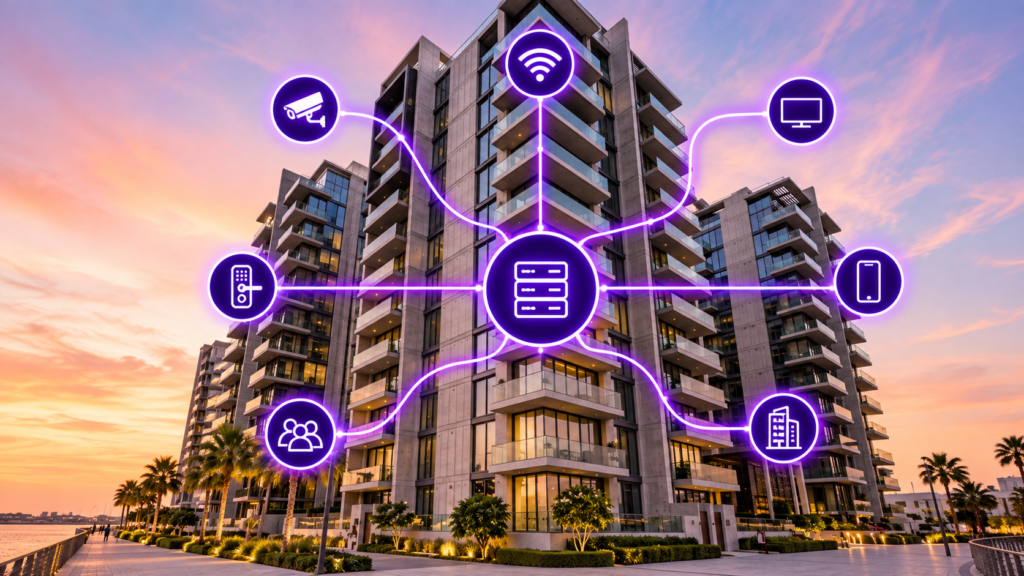
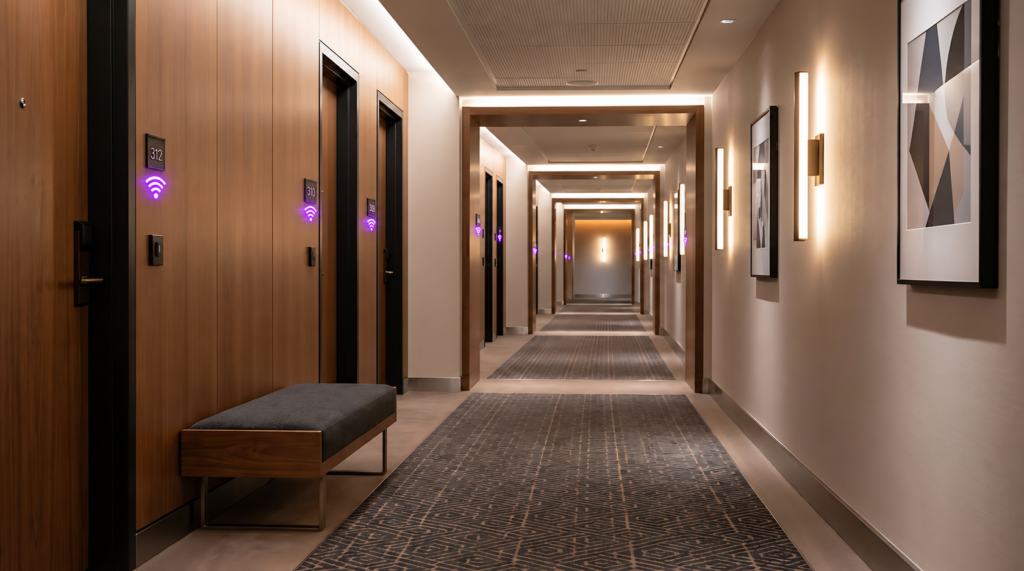
A Virtual Local Area Network, or VLAN, creates a logical partition inside a shared physical network. Instead of every unit sharing one broadcast domain, each apartment is assigned its own isolated segment. Traffic from Unit 204 stays inside Unit 204’s lane. It doesn’t mix with Unit 512’s lane, even though both units are physically connected to the same building-wide fiber backbone.
This type of VLAN segmentation for multifamily properties helps separate resident traffic while allowing the property to continue using shared physical infrastructure.

One Lane Per Unit, Not One Room for the Whole Building
Think of it as the difference between an open floor-plan office where every desk can overhear every conversation, and a building of private offices connected by the same hallway. The hallway, the shared fiber backbone still connects everyone to the internet. But what happens inside each office stays inside that office.
On a Celerity Air network, this segmentation is built into the property-wide deployment from day one. Each unit’s traffic is isolated at the network layer, so a neighbor’s smart lock, baby monitor, or laptop has no visibility into another resident’s devices regardless of how many units are connected to the same physical infrastructure.
Why This Matters More as Smart Devices Multiply
The stakes rise every year as residents add more connected devices — smart thermostats, video doorbells, voice assistants, and security cameras — to their home networks. Each of these devices is a potential entry point. On a segmented network, a vulnerability in one resident’s smart plug stays contained to that resident’s lane. On a flat network, it becomes a building-wide question mark.
As buildings become more connected, fiber internet security for apartment complexes increasingly depends on how effectively resident devices and traffic are separated.
The Question Property Managers Should Be Asking Right Now
During Cybersecurity Awareness Month, it’s worth treating network segmentation the same way you’d treat a fire-safety inspection: not as an optional upgrade, but as a baseline you verify rather than assume.
When you’re comparing providers — especially during the budget-renewal conversations that tend to happen in October and November — ask directly:
“Is our network segmented at the unit level, or is it a shared, flat network?”
If a provider can’t answer that question specifically, or answers with marketing language about speed instead of architecture, that’s useful information in itself. Segmentation isn’t something a provider can retrofit with a software update; it’s a decision baked into how the network was designed and installed.
For property managers evaluating network segmentation for apartment buildings, this should therefore be part of the vendor-selection process rather than something investigated after installation.
Security as an Invisible Amenity
The best security features are the ones residents never have to think about. They don’t ask whether their unit is on its own VLAN any more than they ask about the wiring behind their electrical outlets — they simply expect it to work safely, every day, without their involvement.
That’s the standard a fiber network built specifically for multifamily housing is designed to meet: protection that operates quietly in the background while residents focus on their internet speed, their streaming, and their smart-home devices.
For property managers, that invisibility is the point. A network that requires residents to manage their own security settings is a network that will eventually generate support calls, complaints, or worse. A network engineered with segmentation from the start removes that burden entirely — for the resident and for the property team.
Key Takeaways
- Flat, unsegmented WiFi networks can allow one resident’s device to be visible to others on the same network — a risk most vendor pitches don’t mention.
- VLAN segmentation isolates each unit’s traffic on its own logical lane, even though every unit shares the same physical fiber backbone.
- Segmentation is an architectural decision made at installation, not a feature that can be added later — which makes it essential to verify before signing a new contract.
- Cybersecurity Awareness Month is a useful prompt to add one specific question to every vendor evaluation: how, exactly, is the network segmented?
- The best security is invisible to residents — it protects without requiring anyone to manage settings or think about it.

Ready to See How Your Building’s Network Really Holds Up?
Celerity Fiber builds property-wide networks with VLAN segmentation, symmetrical fiber speeds, and residential-grade WiFi designed for the way people actually live — connected, device-heavy, and expecting privacy without having to ask for it.
If you manage a property and are evaluating network segmentation for apartment buildings, understanding how your current network is architected is a good place to start. A Celerity network audit can show you exactly where the gaps are, at no cost.
Request your free network audit and see whether your building’s current setup is actually built for the residents living in it — not just fast, but secure by design.